The Quiet Wins of Building an ADU in Nevada County (And What Most Homeowners Miss)

There's more to an ADU than rental income or extra square footage. The wins that matter most are the ones nobody mentions until you're living with them.
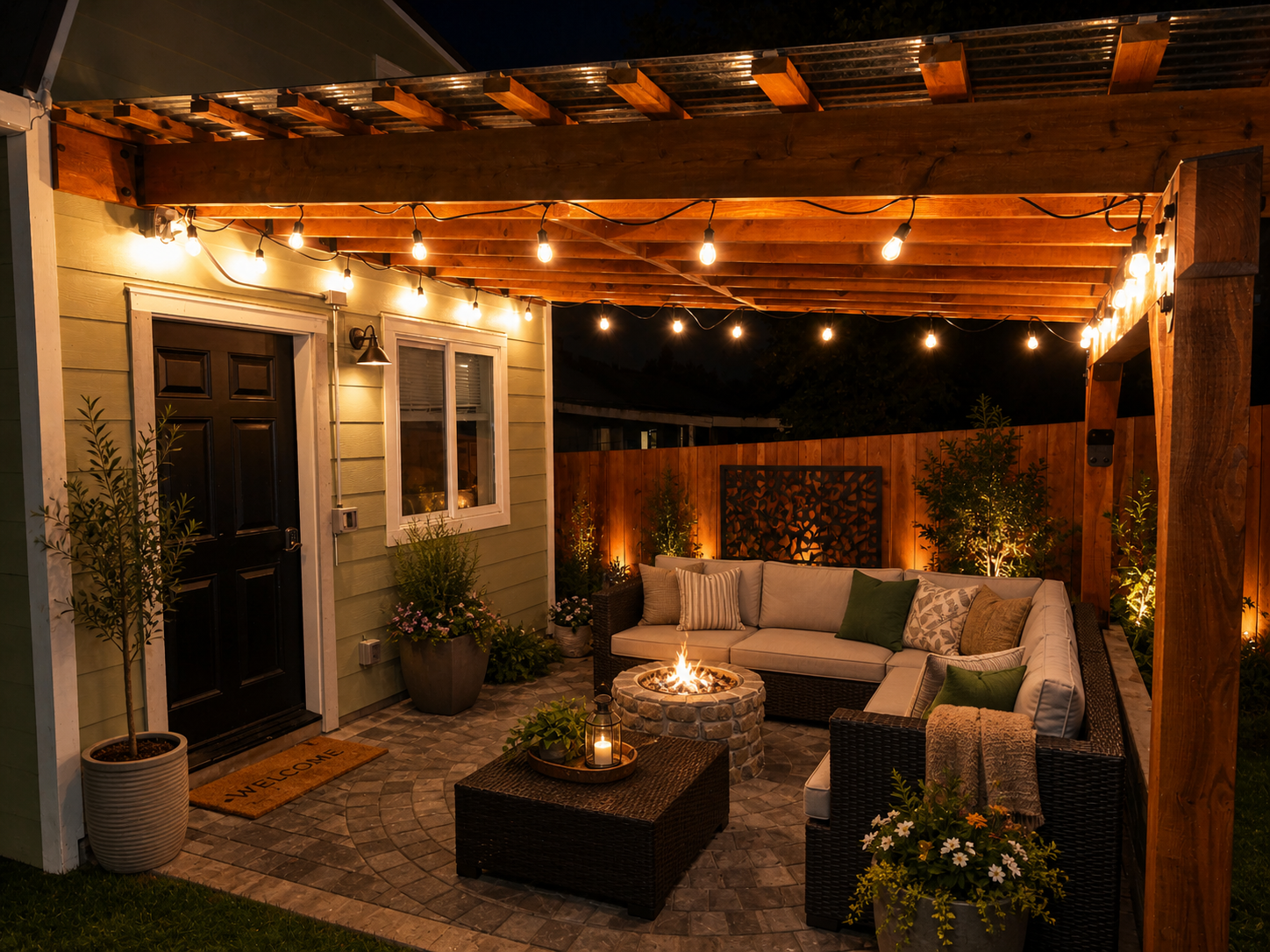
The Quiet Wins of Building an ADU in Nevada County (And What Most Homeowners Miss)
By Matthew Sutherlin | Green Bee Construction Inc | Serving Grass Valley, Nevada City, Auburn, Nevada and Placer Counties
You can search "ADU return on investment" and find a hundred calculators that ask you for the rent, the construction cost, and the time horizon. Plug the numbers in and the spreadsheet tells you whether to build.
The spreadsheet is missing about half of the actual math.
After twenty years building ADUs, custom homes, and renovations across Nevada and Placer Counties, the projects I've watched turn out best are the ones where the homeowner understood going in that rental income was one of four returns, and not always the biggest. The ones who built on the rental-only frame either got lucky or got disappointed. The ones who built on the whole picture got something quieter and more durable.
This post is the whole picture, including a real Nevada County project that penciled even with substantial variables in play.
The Four Returns Most Homeowners Don't Add Up
A well-built ADU in Nevada County does four things at once. Most marketing focuses on one. The real return comes from all four stacking.
Rental income. A clean one-bedroom ADU in Grass Valley, Nevada City, or Auburn rents for $1,800 to $2,400 a month in 2026. That's $21,600 to $28,800 a year on land you already own.
Property value. A permitted, well-built ADU on a well-located parcel typically returns 70 to 100 cents on the construction dollar at completion, then keeps appreciating with the rest of the property over time.
Multigenerational flexibility. Aging parents in a separate, accessible structure fifty feet from the main house is a different life than aging parents two hours away. The same building houses your college-age kid in five years. Becomes a studio after that.
Optionality. This is the one nobody talks about. An ADU gives you choices you didn't have before. Downsize and rent the main house. Sell with two income streams instead of one. Move a family member out of an assisted living facility you're already paying for.
Most homeowners realize five years in that the optionality was worth more than the original use case they built for.
A Real Project, A Real Number
One of our projects on Main Harding in Grass Valley is the clearest example I can give.
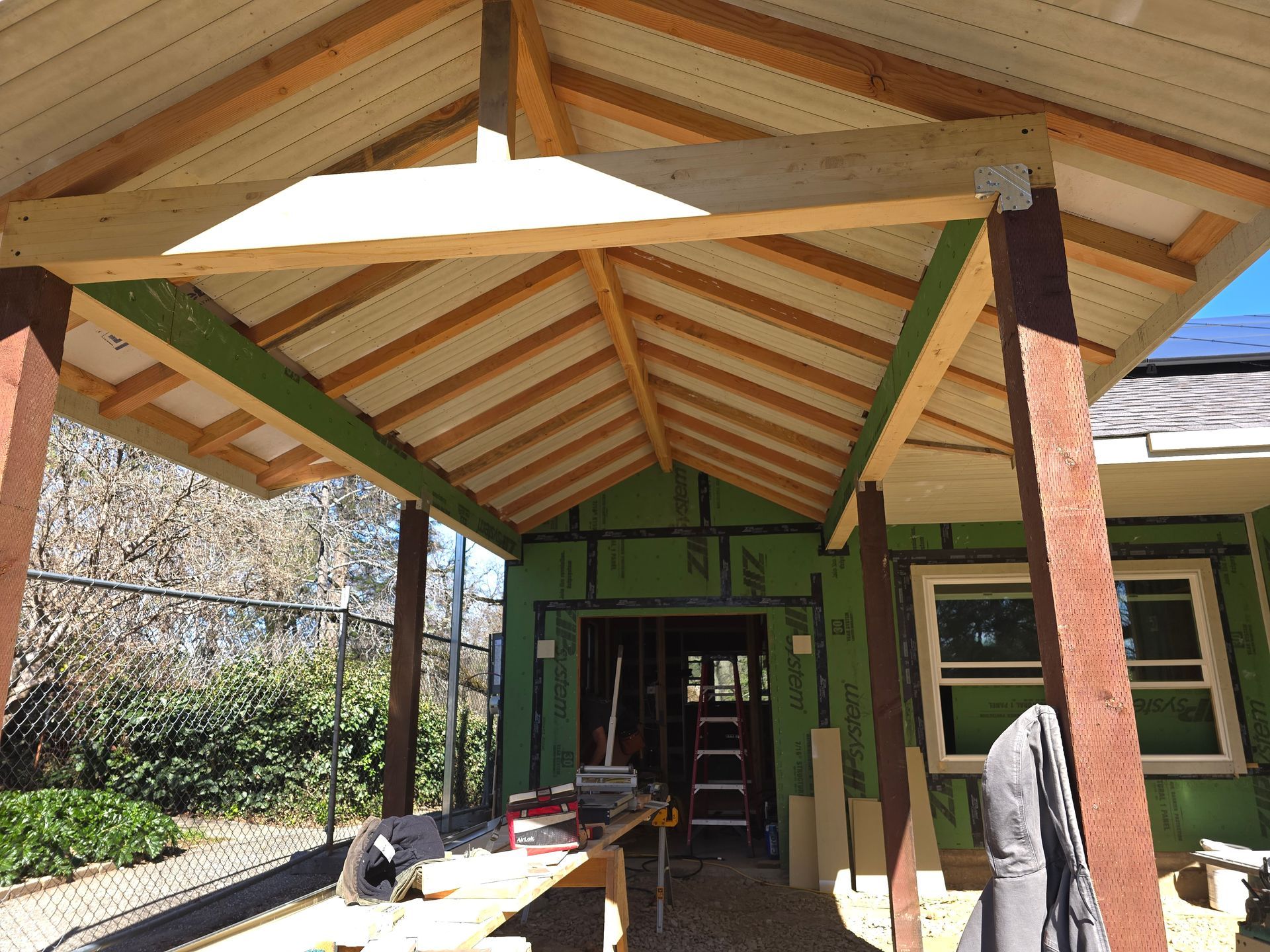
The starting point looked like a deal. A dilapidated old garage that had been used commercially for years, sitting on a lot with gas, electric, water, and sewer already there. On the surface, the existing utilities and existing structure looked like a way to convert cheap and finish fast.
Pre-construction is where we get the actual picture on a project like this. We did the same here.
Our walk-through, structural assessment, and condition review identified the full scope before the contract was signed. The slab was shot and would need to come out. Underneath it was an older slab from a prior pour that would also need to be removed. Once we got down to grade, the elevations weren't going to work. We'd need to undermine sections of the original foundation, zipper the cracks, pour new footings, and lay a new insulated slab. The existing framing was out of square and would need to be pulled straight. Rotten material would need to be replaced. Lead-paint renovation work would need to be handled by code. The interior plumbing and electrical would be redone from scratch. And we knew the new ADU plumbing would tie into ninety-year-old lines in the original house, which we flagged as a future maintenance item the owner should plan around.
All of that went into the original build budget. None of it was a surprise.
Then we ran the actual feasibility numbers. Loan cost. Projected rental income from the ADU and the main house. Existing mortgage, taxes, insurance. A realistic maintenance reserve. Payoff timing. Property value uplift.
The math penciled. Not as cleanly as a simple new build on a flat lot with no remediation, but cleanly enough to make the project a good investment.
The outcome bore that out. The property had been running at a deficit every year. After the ADU was built and rented, it ran in the black by a meaningful margin. The ADU is projected to shorten the property's overall mortgage by roughly ten years and added over $100,000 to property value at completion.
That's the honest version of the math when you know what you're getting into going in.
What an ADU Actually Costs in Nevada County in 2026
Sophisticated homeowners want real numbers, not "it depends." Here is what is true right now.
A well-built ADU in Nevada or Placer County in 2026 generally lands in the $350 to $450 per square foot range, with conversions of older structures often running higher when remediation work surfaces.
Three things move the number.
ADU type. A junior ADU inside the existing home is the cheapest per square foot. A detached new build is the middle. A conversion of an old garage or outbuilding can be the cheapest on paper and the most expensive in reality, depending on what's hiding inside the existing structure.
Utility access. Gas, water, sewer, and electric at the property line is one cost. A run of fifty or a hundred feet to a backyard ADU site is another. A transformer upgrade or a septic expansion is another category entirely.
Site work. Flat parcel with clean access is cheapest. Sloped foothill parcels with rock, drainage issues, or long driveway extensions add real money. Site work alone runs $20,000 to $80,000 on harder lots.
Soft costs (plans, engineering, Title 24, permits, school fees) add another 10 to 20% on top of construction. Budget for them up front.
One cost reducer worth knowing about. The Nevada County Housing Master Plans program offers three pre-approved ADU plan sets ranging from about 600 to 1,200 square feet for $1,200 per set. They're pre-engineered for the region's snow load and seismic conditions. You still need site-specific docs (survey, site plan, grading, drainage), but architectural fees and plan review time drop meaningfully. See Nevada County's official Housing Master Plans page for current plans and program details.
The Local Specifics That Decide the Math
Three things shape every ADU project in this region.
Septic capacity. Most unincorporated parcels in Nevada County are on septic. Septic systems are sized by bedroom count. Adding an ADU bedroom often means upgrading the septic system, which runs $15,000 to $40,000. There are workarounds in some cases. A site walk is the only way to tell.
Setbacks and lot coverage. Detached ADUs are ministerially permitted in most residential zones, but lot coverage maximums can quietly cap your buildable size. The conversation worth having in week one is whether the ADU you're imagining actually fits the lot.
Fire zones. Most of Nevada and Placer Counties sit in a State Responsibility Area, which means Chapter 7A of the California Building Code applies to exterior materials, eaves, vents, and decks. The right ADU design starts with 7A as the floor, not the ceiling.
Working with Green Bee Construction Inc
Green Bee Construction Inc is a licensed California general contractor (CSL #935362) based in Grass Valley. We've been building ADUs, custom homes, additions, and fire rebuilds across Nevada and Placer Counties for twenty years.
A few things that matter on an ADU project.
We back every home we build with a 5-year extended structural warranty referenced to California Civil Code. Most contractors offer one year. We offer five because we build to a standard that holds up to it.
The work runs on a three-layer model. I'm the owner and operational manager, accountable for project setup, subcontractor coordination, permitting strategy, milestone reviews, and quality standards. Our superintendent runs daily site execution, crew, schedule, and inspections. Our skilled crew and vetted subcontractors perform the work itself. That structure means you get owner-level decision-making on every contract and crew-level execution on every nail, with someone you can reach when something needs to be decided.
We know the Nevada County permit office, the plan examiners, and the inspectors by name. That doesn't get you anything you shouldn't have. It does mean problems get caught early and solved faster.
Frequently Asked Questions
Is building an ADU worth it in Nevada County?
For most owner-occupied parcels with reasonable site conditions, yes, but the math runs on more than rental income. Property value uplift, family flexibility, optionality on resale, and the ability to shift income streams over time are the real return drivers. Run all four into your pro forma before deciding.
How much does an ADU add to property value in California?
Permitted, well-built ADUs typically return 70 cents to 100 cents on the construction dollar at completion in most California markets, then continue appreciating with the rest of the property. Unpermitted or poorly built ADUs can subtract value at resale. The permit and the build quality are the difference.
Can I rent out my ADU in Nevada County?
Yes, for long-term tenancies. Most jurisdictions in Nevada County require ADU rentals to be 30 days or longer. Short-term rental rules (Airbnb, VRBO) are regulated separately by the county and the cities and have changed several times. Check the current ordinance before counting on short-term income.
Does building an ADU raise my property taxes?
The ADU itself gets assessed and added to the tax bill. The rest of the property is not reassessed under Proposition 13. The increase applies only to the new construction's assessed value, which is usually a small fraction of the property's total assessed value.
What are the hidden costs of building an ADU?
The ones that surprise first-time builders most often: septic capacity verification or upgrade, utility runs from the property line to the ADU site, site prep on sloped or rocky lots, soft costs (plans, engineering, Title 24, permits), and impact fees on ADUs over 750 square feet. A "$250K ADU" honestly scoped often lands closer to $300K to $375K all-in.
Is converting an existing structure cheaper than building new?
Sometimes. A clean detached garage on a good slab with existing utilities can convert cheaply. A dilapidated structure with foundation issues, rotten framing, or outdated systems can cost more than building new. The pre-construction walk-through is where you find out which one you have.
Can I use projected ADU rental income to qualify for a loan?
On a refinance after the ADU is built, lenders generally allow a portion of documented rental income to count toward qualification. Pre-construction, lenders are more conservative. A construction-to-permanent loan or a HELOC against existing equity is the most common financing path for Nevada County homeowners building an ADU in 2026.
How long does an ADU project take from first conversation to keys?
Typically 9 to 14 months for a custom or semi-custom detached ADU. Roughly 2 to 4 months for design and permitting, 4 to 7 months for construction. Pre-approved plans compress the design phase. Complex sites and conversions can add time.
Do I need a permit to build an ADU in Nevada County?
Yes. Every ADU in Nevada County requires a building permit, regardless of size or type. Detached ADUs in single-family residential zones are ministerially permitted, meaning they are approved as-of-right when they meet code, but the permit itself is still required and submitted through the Nevada County Citizen Access Portal.
Can my existing septic system handle an ADU?
Sometimes yes, sometimes no. The system is sized by bedroom count, and adding an ADU bedroom often triggers a capacity review. A site walk and a look at the existing system records is the only honest way to tell. We build that check into our pre-construction process so you find out in week one, not week ten.
Have a question we did not cover? See our full FAQ page for more answers, or reach out directly.
The Takeaway
A well-built ADU in Nevada County stacks four returns: rental income, property value uplift, family flexibility, and optionality. The homeowners who build on all four come out ahead. The ones who build on rental income alone sometimes do too, but they're depending on a single number to carry the whole project.
The Main Harding project carried more variables than a clean new build. We identified them in pre-construction, planned the budget around them, and ran the feasibility before committing. It turned a property that ran in the red every year into a property that runs in the black, with the timeline to mortgage payoff shortened by about a decade. That's the honest math on a well-run ADU done right.
If you're considering an ADU in Nevada or Placer County and want a straight conversation about whether your site actually supports what you have in mind, reach out. Initial consultations are free. We'll tell you honestly whether the project pencils.
Ready to talk? Contact Green Bee Construction Inc or call 530-575-1700 to schedule a free site walk and feasibility conversation.
Related reading: ADU Builder in Grass Valley, CA| Custom Home Builder in Grass Valley, CA| Industry-Leading Extended Warranty
Green Bee Construction Inc | CSL #935362 | Grass Valley, California | Serving Nevada and Placer Counties for twenty years
Share this!